






BY-V4 问答
Q1What are Transmitters and Receiver respectively? And which one is the microphone?
Transmitter, also known as TX, is a device that converts audio into radio signals, which is then transmitted to the Receiver. The built-in microphone, also known as the integrated microphone, picks up sounds. RX, short for Receiver, is a device that receives the radio signals sent by transmitters. It transfers the radio signals into the digital ones, so the connected devices (phones, cameras, laptops, etc.) can process them.
Q2What are the differences between a Transmitter and a Receiver?
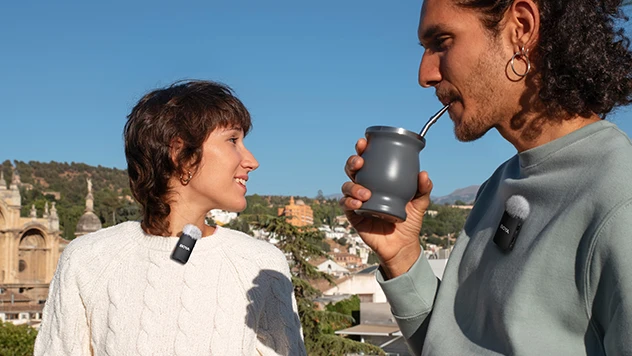
Transmitters are usually labeled TX and come with a clip, which can be magnetic, so you can wear it or attach it easily. Receivers are usually labeled RX, which need to be connected to cell phones, tablets, cameras, or laptops for recording.
Q3What devices can BY-V4's receiver be connected to?
BY-V4's receiver comes in three versions: USB-C, Lightning, and 3.5 mm TRS. Simply plug the receiver in a matching device and you're all set to create. No extra adaptors are needed. USB-C: For most Android devices, iPhone 15, and Huawei devices. Lightning: For iPhone 8 and later models until iPhone 14. (The Lightning connector is MFi-verified.) 3.5 mm: For use with cameras and camcorders. (For use on laptops that are equipped with USB ports, a USB-A to USB-C adaptor is required.)
Q4Can I use BY-V4 directly with my camera?
BY-V4 can only be connected to cameras via the 3.5 mm adaptor, so if you're planning to use it with your cameras, be sure to purchase the right version. It can also work with DJI Action 2, Action 3, Action 4, and DJI Pocket 3.
Q5What does channel mean in one channel, two channels, three channels, and four channels? And which one should I choose?
One-channel refers to a wireless microphone system that has only one receiver and one transmitter, suitable for solo vlogging, podcasting, and any other content creation that features one person only. Two-channel, or dual-channel, means that there are two transmitters and one receiver in the system. The receiver can capture the signals from both of the transmitters at the same time, making it suitable for interviews, live streaming, short video production, and any other content that involves two people. Three-channel, as indicated by the name, means the receiver can capture and process signals from three transmitters at the same time. Suitable for multi-person interviews, vlogging, and meetings. Four channels refer to a system that contains four transmitters and one receiver. Suitable for stage performance, instrument performance, roadshows, and multi-person interviews.
Q6Can I pair only one transmitter with the receiver?
Yes. You may group the transmitter(s) with the receiver per your need: solo channel, dual-channel, three-channel, and four-channel.
Q7How do I pair BY-V4?
1. The transmitter(s) and receiver are pre-paired in the factory. 2. If they are found disconnected, please follow the instructions below to re-establish the connection. a. When the transmitter is powered off, press its power button for five seconds to activate pairing. Remove your finger when the blue light starts flashing quickly. b. Insert the pin that comes with the package to the pairing hole and press once. When the blue lights start flashing, that means pairing is in process. c. The paring will be finished in 10 seconds, after which the blue lights on both the TX and RX will be always-on.
Q8I am getting low volume on my recordings. How do I adjust?
When you're recording, please don't speak directly into the microphone as it may result in clippings. We suggest that you fix the microphone in a place on your chest that is 15 centimeters away from your mouth. If you tend to speak loudly, please fix the transmitter in a place lower down your collar. But if you speak with a normal volume, you may fix the transmitter a bit closer to your mouth.
Q9What is the battery life of BY-V4?
6 hours for the transmitter. The charging case can provide an additional 2 cycles of power for the transmitters, so the system's battery life can go up to 18 hours in total.
Q10How to activate BY-V4's noise cancellation?
1. Press the NR button on the side of the transmitter to activate/deactivate noise cancellation. 2. When noise cancellation is activated, the indicator light on the left side will turn green. 3. Noise cancellation can reduce the background noise.
Q11Do I need to unplug the receiver when the video/audio is on playback?
No. Toggle the switch to the left to activate the connected device's speaker, so you can hear the recordings without unplugging the receiver. *When you toggle the switch on and off, the receiver will reboot and remake connection with the transmitter(s). This shouldn't be considered malfunction.
Q12What is Signal-to-noise Ratio? Does 80 dB signify a better recording quality?
The signal-to-noise ratio is the comparison between the signal and noise. The bigger the number is, the better the recording quality will be. Noise refers to the unwanted sound that occurs when currents flow between devices. BY-V4 features an SNR of 80 dB, which is considered a professional level. The noise is at a low volume that it is not accessible to human ears, so the sounds you capture with the system are pure.
Q13What is sample rate?
The sample rate refers to the number of times a microphone samples a sound source per second. BY-V4 features a sample rate of 48 kHz, which means it samples a sound source 480,000 times a second, allowing the sound captured to be detail-rich and natural.
Q14What is SPL?
The SPL of BY-V4 is 120 dB, which can handle screams, honks, and high-intensity sound sources without clippings or distortions.