







In 2026, the modern workplace is no longer a single location—it is a fluid stream of conversations. On any given day, a professional might move from an in-person strategy session in a noisy cafe to an urgent client call while commuting, and finally to a virtual Zoom meeting using Bluetooth headphones.
While recording tools are more accessible than ever, our professional memory remains fragmented. Capturing audio across these shifting environments presents significant logistical hurdles, often leaving critical information scattered or lost. Building a reliable "Second Brain" requires a system that seamlessly unifies our physical and digital conversations into a single, searchable knowledge base. For many, the first step is learning how to choose your first AI voice recorder in 2026 to match these evolving needs.
The Three Entry Paths: How Audio Enters Your Workflow
To better manage professional information, we must look at the three primary ways audio enters our daily workflow. Each scenario presents distinct technical requirements that few devices address in a unified experience.
1. Ambient Recording: Capturing the Physical Space
Ambient recording is the bedrock of field-work, interviews, and board meetings, where the goal is to capture sound directly from the surrounding environment. However, most recorders struggle with background clutter—air conditioners, keyboard clacks, or coffee shop chatter—which causes the clarity of a distant speaker to degrade into an unusable hum.
To solve this, professional-grade systems now combine high-sensitivity dual-mic arrays capable of 10-meter pickup with advanced AI noise cancellation. By suppressing up to 30dB of environmental noise, these devices can isolate human voices even in chaotic settings, ensuring every participant is heard clearly.

2. Call-Based Recording: Navigating Technical Barriers
Phone calls are where the most sensitive and binding professional agreements happen. For years, the "System Wall" of iOS and Android has restricted third-party apps from recording calls natively. This has historically forced professionals to use unreliable software workarounds or clumsy speakerphone setups.
Modern hardware provides a more stable alternative. By snapping a device to the back of a phone, built-in bone-conduction sensors can capture call audio at the hardware level. This ensures a clean, natural recording for record-keeping and transcription, provided that users comply with local recording regulations and consent laws in their respective jurisdictions.
3. Bluetooth Bridging: The Missing Link in Remote Work
The "Remote Work Revolution" introduced a new recording dead zone: the Bluetooth headset. When you wear a headset for a Zoom or Teams meeting, the audio is locked within a digital signal that a standard desk recorder cannot hear.
Instead of forcing users to switch to speakerphone—which compromises both privacy and audio quality—modern AI recorders can now act as a Bluetooth audio bridge. By routing the digital audio stream through a paired Bluetooth channel, the device captures both sides of the virtual conversation while allowing the user to keep their headphones on. This effectively brings online collaboration into the same workflow as offline meetings.
The Emergence of Multi-Mode AI Recorders
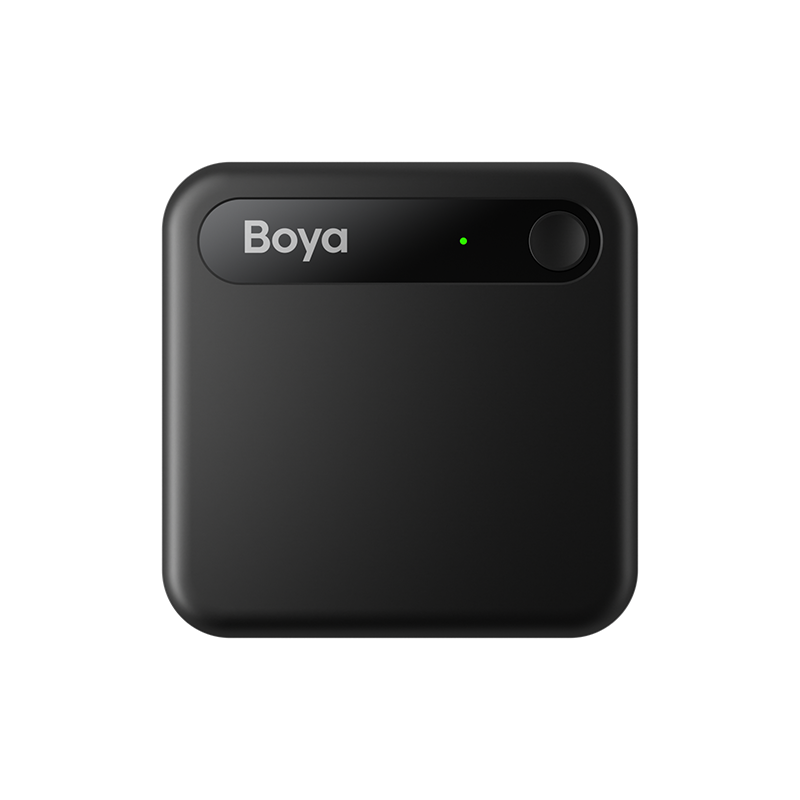
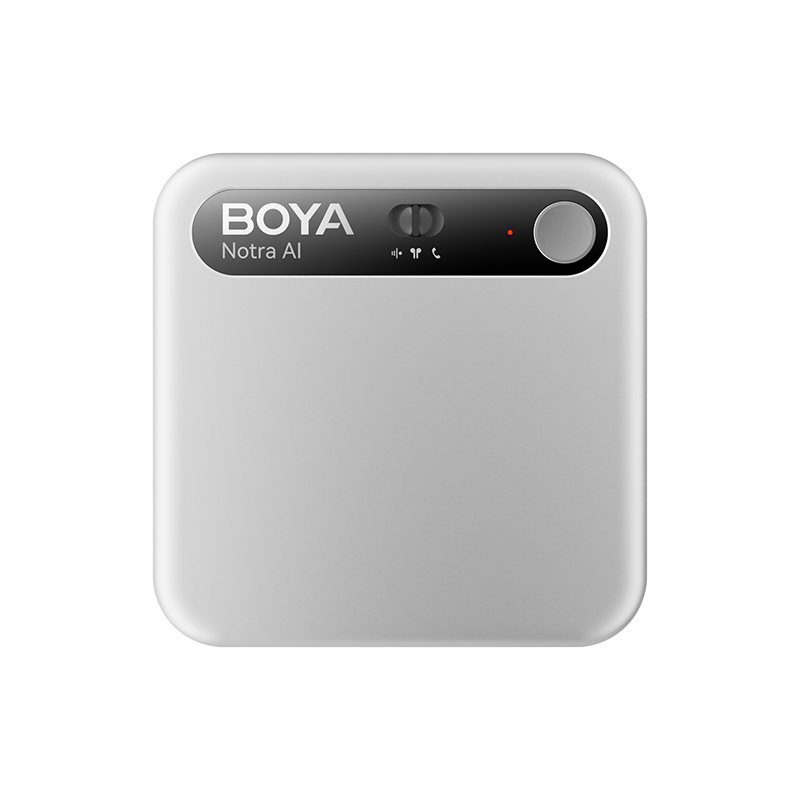
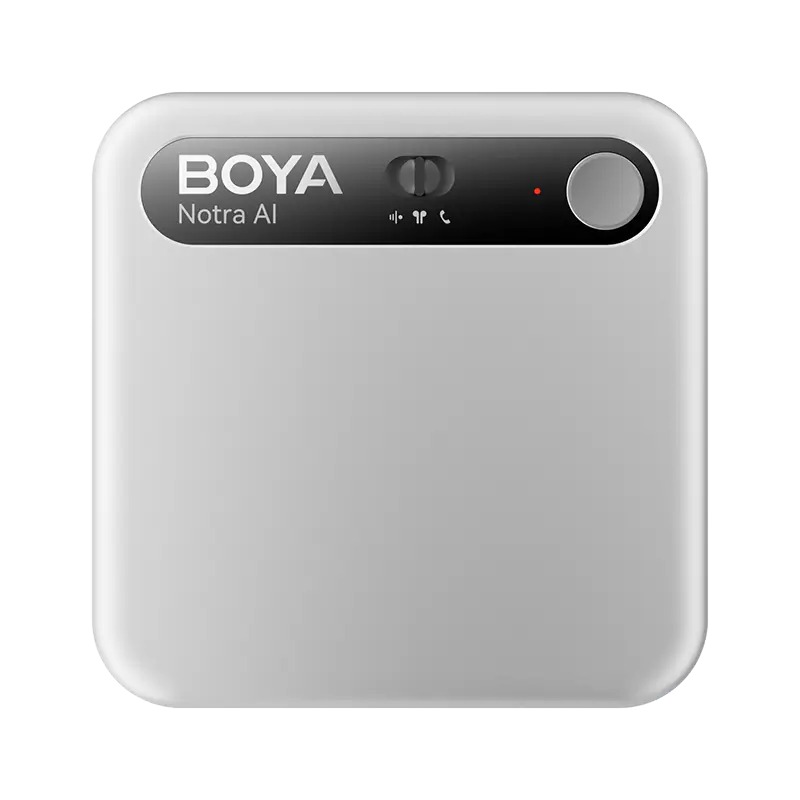
As these fragmented workflows become the norm, the industry has evolved to provide all-in-one solutions. A prime example is the BOYA Notra, which integrates Ambient, Call, and Bluetooth recording into a single, professional workflow.
Rather than forcing the user to juggle different apps or accessories, the BOYA Notra adapts to the immediate context. Its magnetic snap-on design enables bone-conduction call recording, while high-fidelity mics handle wide-range ambient capture. For virtual collaboration, its dedicated Bluetooth mode ensures that no detail is lost during remote sessions. For those debating between hardware and digital-only tools, understanding the nuances of AI voice recorder vs AI meeting software can help clarify why a dedicated device is often superior for cross-scenario use.
Beyond Capture
BOYA Notra leverage advanced AI to ensure that raw text becomes actionable information through several key features:
- Advanced Speaker Labeling: Automatically identifying and labeling different participants in a conversation.
- Global Language Support: Transcribing and summarizing in over 140 languages.
- 60+ Professional Templates: Moving beyond simple summaries to turn recordings into specific outputs—such as consultation notes or structured project updates.
High-Capacity & Secure Storage
For professionals who record hours of data daily, storage and security are paramount. BOYA Notra now offer 64GB of local memory, capable of holding up to 8,000 hours of audio. This ensures you never run out of space during a critical week of meetings.
Furthermore, security is treated with bank-level priority. Utilizing AWS-encrypted cloud backup, your data remains protected. Given the sensitive nature of these files, many professionals often ask: are AI voice recorders secure? The answer lies in multi-layered encryption that ensures even if the hardware is lost, the encrypted files stay inaccessible to unauthorized users.
Conclusion
The quest for a "Second Brain" isn't about buying a gadget; it's about closing the loop of your professional life. When a tool can move as fast as you do—from a handshake in a lobby to a call in a taxi, to a video conference at home—it ceases to be a recorder and becomes an extension of your mind.
By solving the technical hurdles of call and Bluetooth recording while adding a layer of structural AI, tools like the BOYA Notra allow professionals to stop focusing on the mechanics of remembering and start focusing on the art of deciding.
To learn more about the latest news from BOYA, join in our official social media accounts: Facebook, Youtube, Instagram.
Frequently Asked Questions
How does Bluetooth recording solve the "Headset Problem"?
It acts as an audio bridge, pairing with your PC or phone to route the digital stream sent to your earphones, ensuring both sides of a virtual meeting are captured without using speakerphone.
Is it legal to record phone calls with this device?
While the hardware provides the technical capability for high-quality recording, users must always ensure they are in compliance with local laws regarding consent and notification.