








If you’ve recently started looking for your first wireless microphone, you’ve probably noticed something confusing: there isn’t just one type to choose from.
There are lavalier mics for talking-head videos, handheld mics for interviews, on-camera mics for run-and-gun shooting, and desktop setups for podcasts or streaming. Each one seems to solve a specific problem—but rarely all of them.
That’s where a new category is starting to stand out: multi-form wireless microphones.
Instead of asking you to choose the right type, these systems are designed to adapt to how you create. And for beginners especially, that shift can make a bigger difference than any spec sheet ever will.
The Real Shift: Creators No Longer Work in Just One Scenario
Not long ago, content creation was more predictable.
- You filmed interviews → you used a handheld mic
- You recorded voiceovers → you used a desktop mic
- You shot videos → you clipped on a lavalier
Each tool had a clearly defined role. But today, that structure doesn’t really hold up.
A typical creator might:
- Film a vlog while walking outdoors
- Switch to a quick interview with a friend
- Record a desk setup later that day
- Jump into a live stream at night
Content creation has become fluid. The problem is, most microphones are still designed for fixed scenarios.

The Limitation of Traditional Single-Form Microphones
To be clear, traditional microphones aren’t flawed—they’re just specialized.
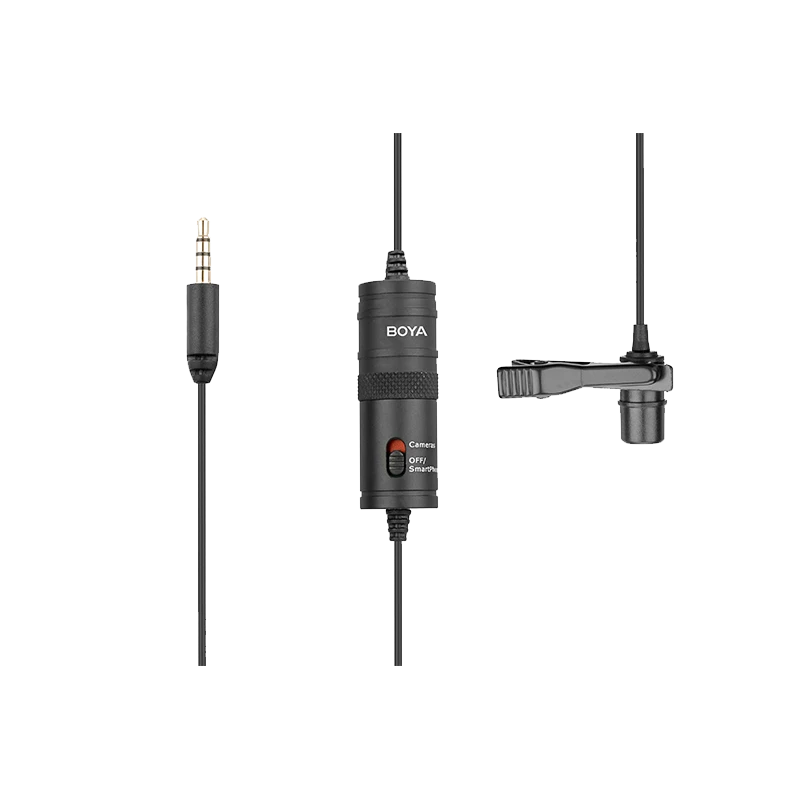
- A lavalier mic is great for talking-head videos
- A handheld mic works well for interviews
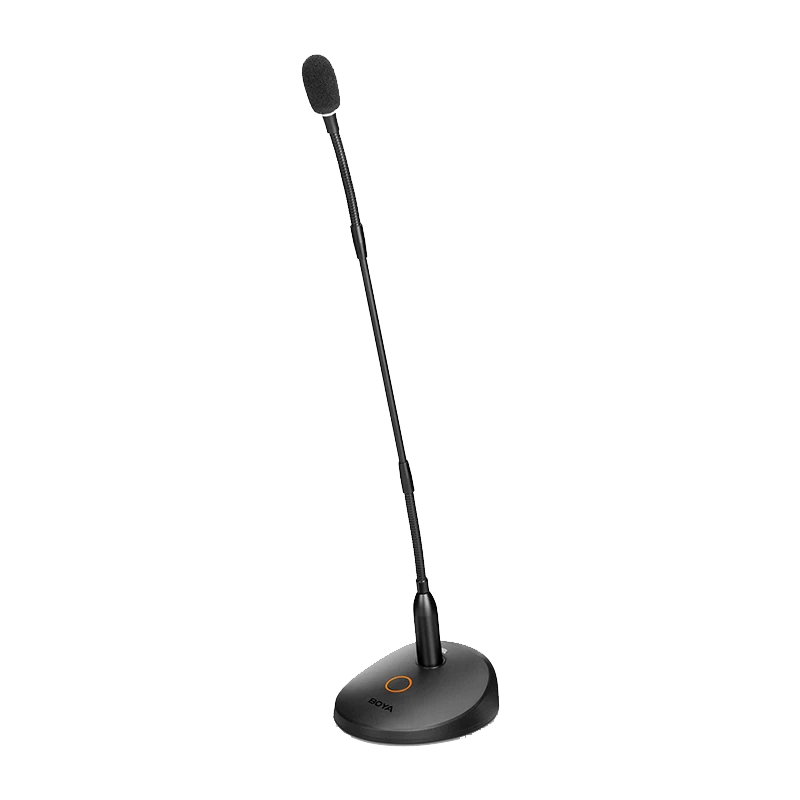
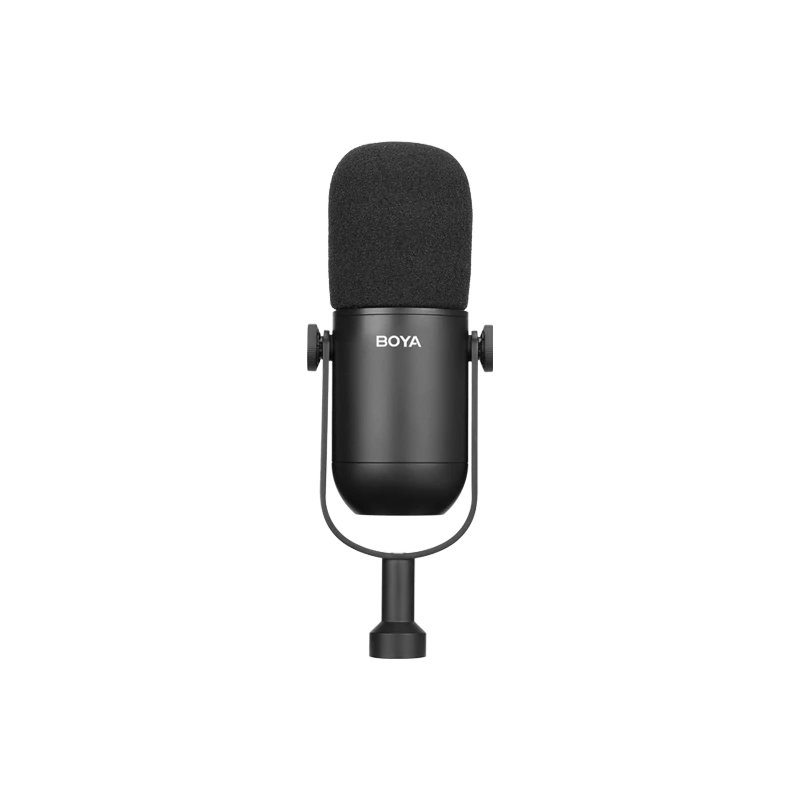
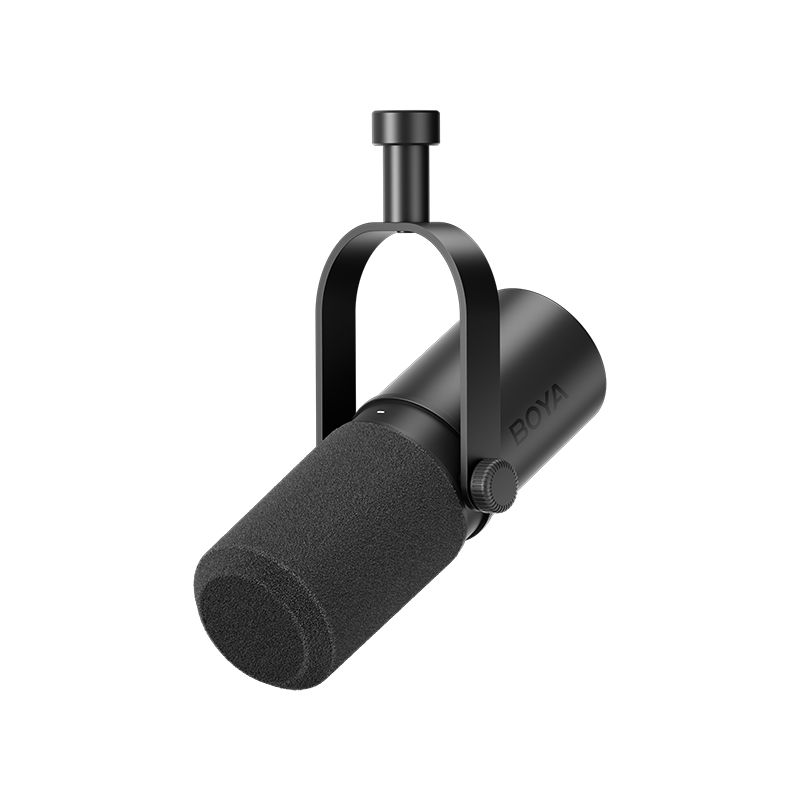
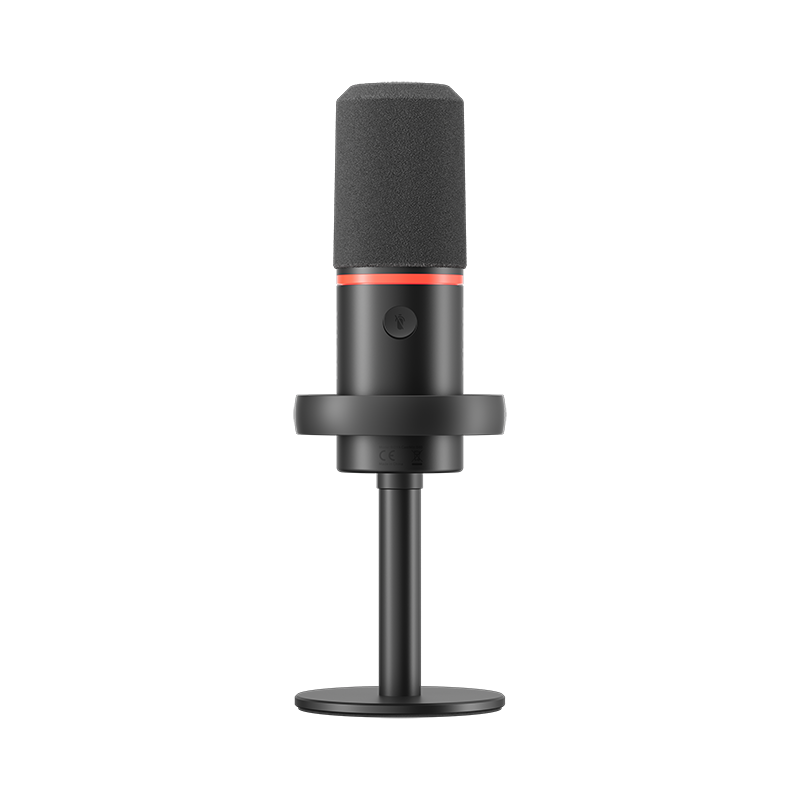
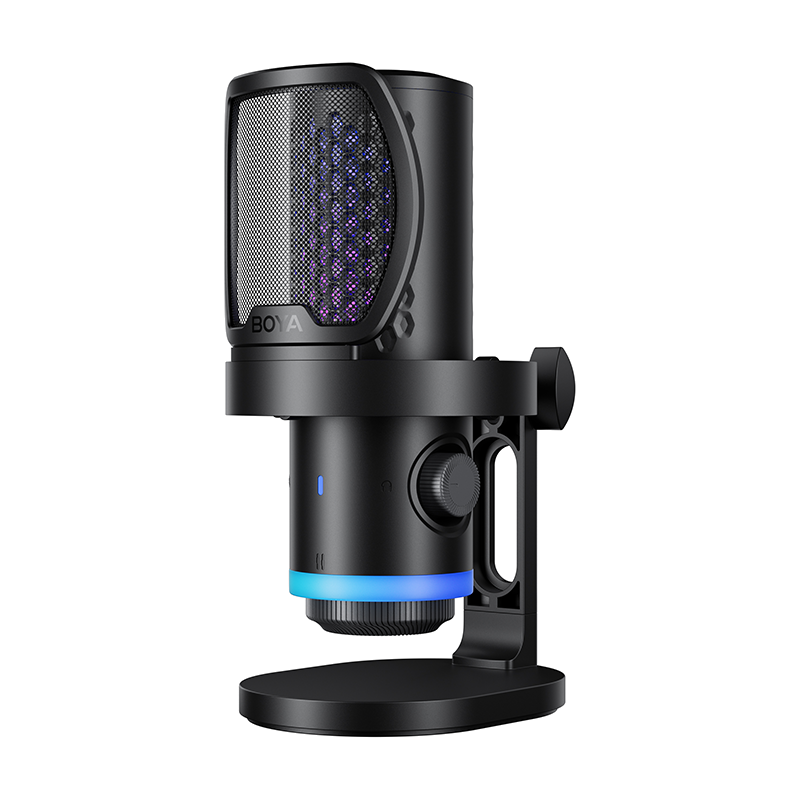
- A desktop mic is ideal for controlled environments
But each comes with trade-offs:
- A lavalier can feel limiting in dynamic situations
- A handheld isn’t always practical for solo shooting
- A desktop setup lacks mobility
For experienced creators, this isn’t a big issue—they build kits around specific needs. For beginners, though, it often leads to a different problem:
You don’t just need to learn how to create—you also need to figure out which gear fits which situation.
And that’s where things start to feel unnecessarily complicated.
What Is a Multi-Form Wireless Microphone?
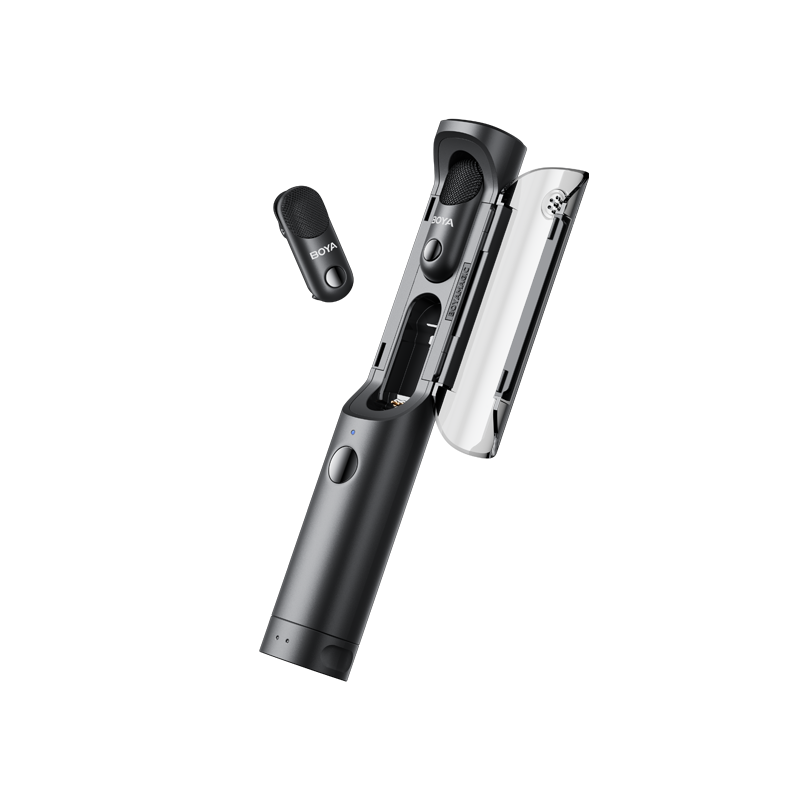
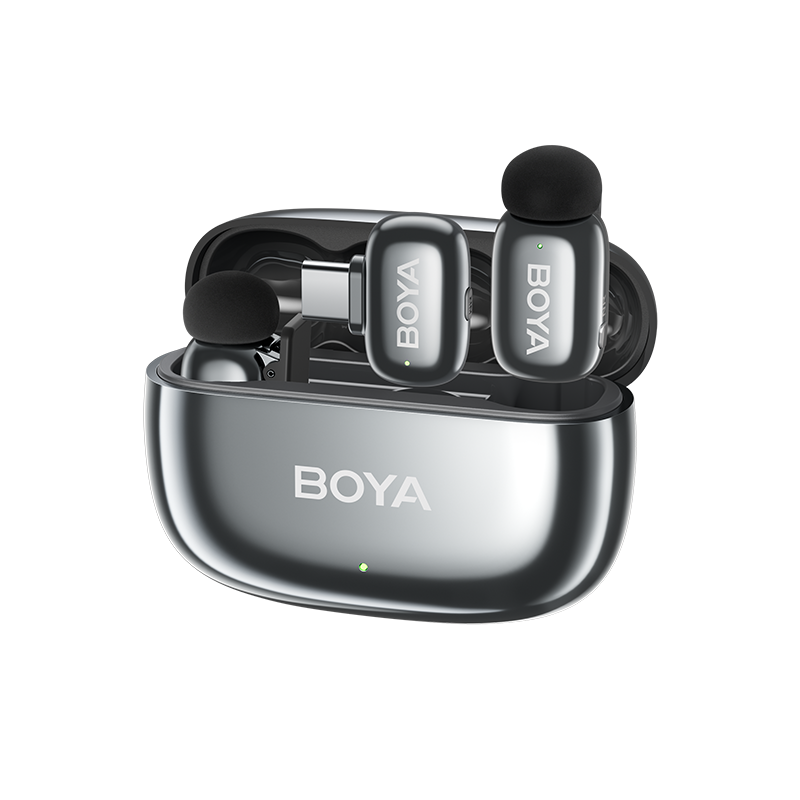
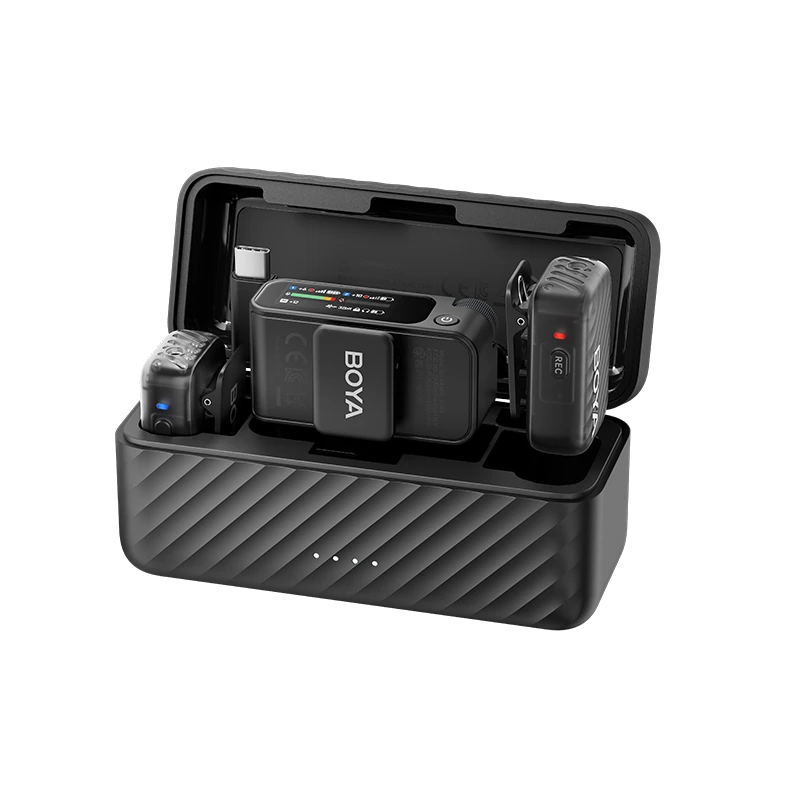
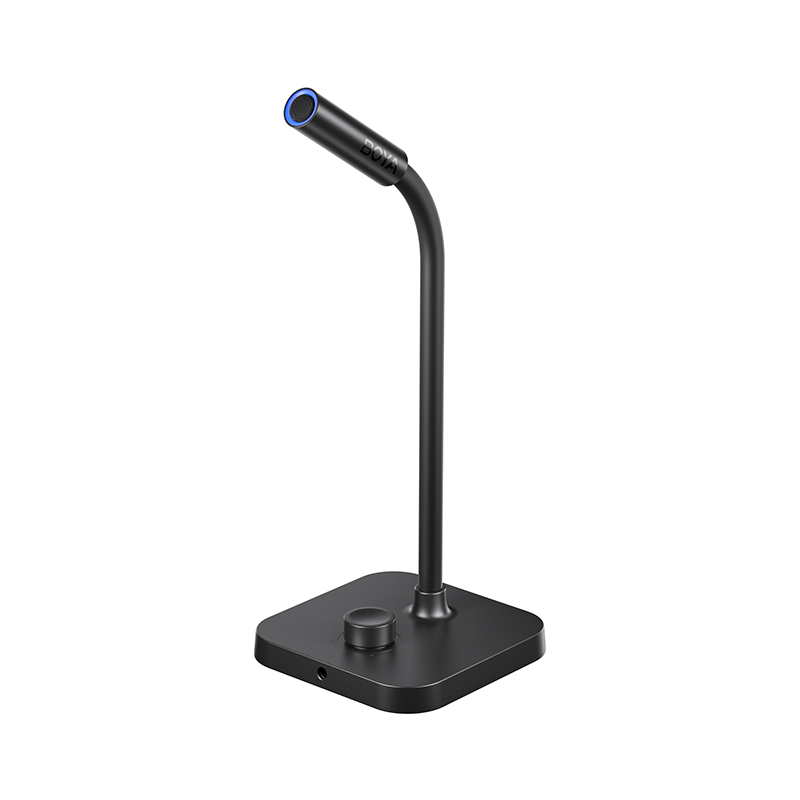
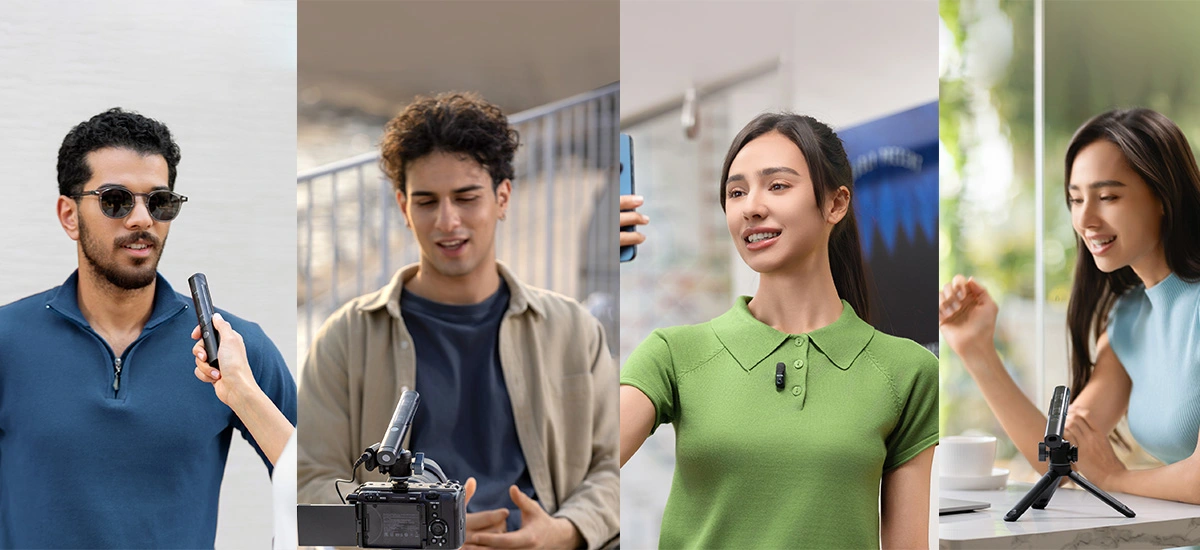
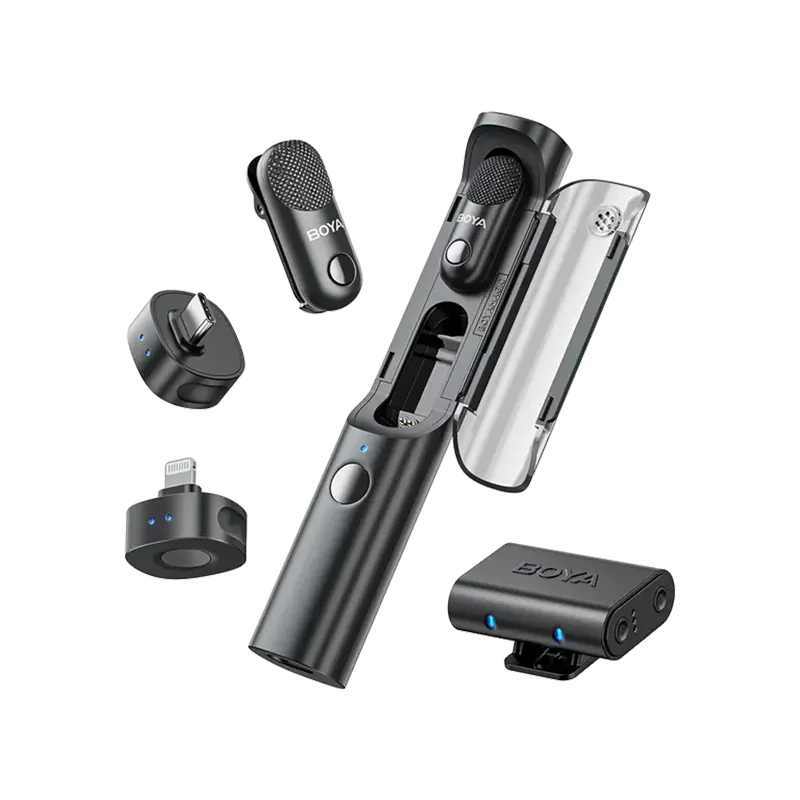
A multi-form wireless microphone is designed to work across multiple recording styles within a single system. Instead of committing to one format, it allows you to switch between different use cases, such as:
- Lavalier (clip-on) for hands-free recording
- Handheld for interviews or on-the-go speaking
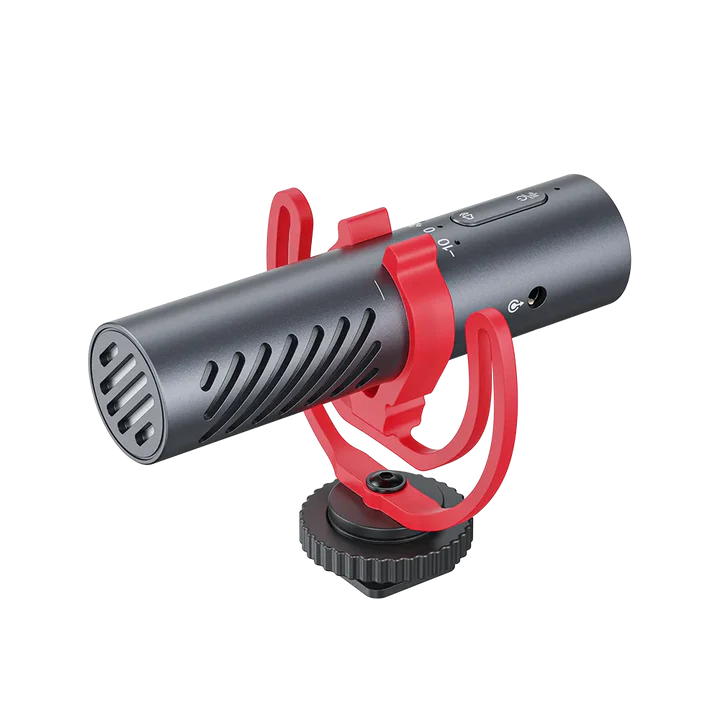
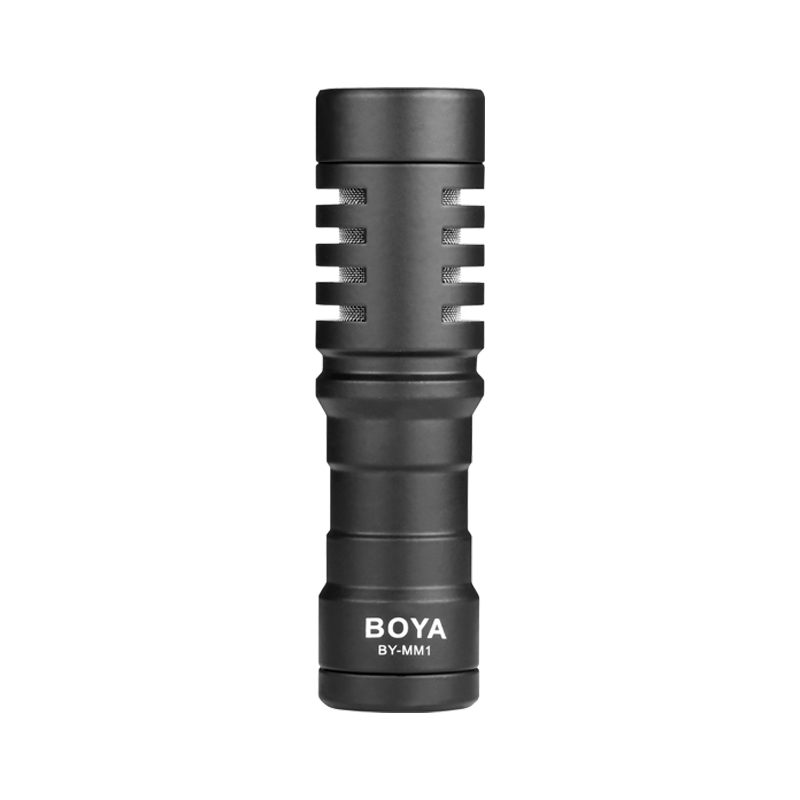
- On-camera for run-and-gun shooting
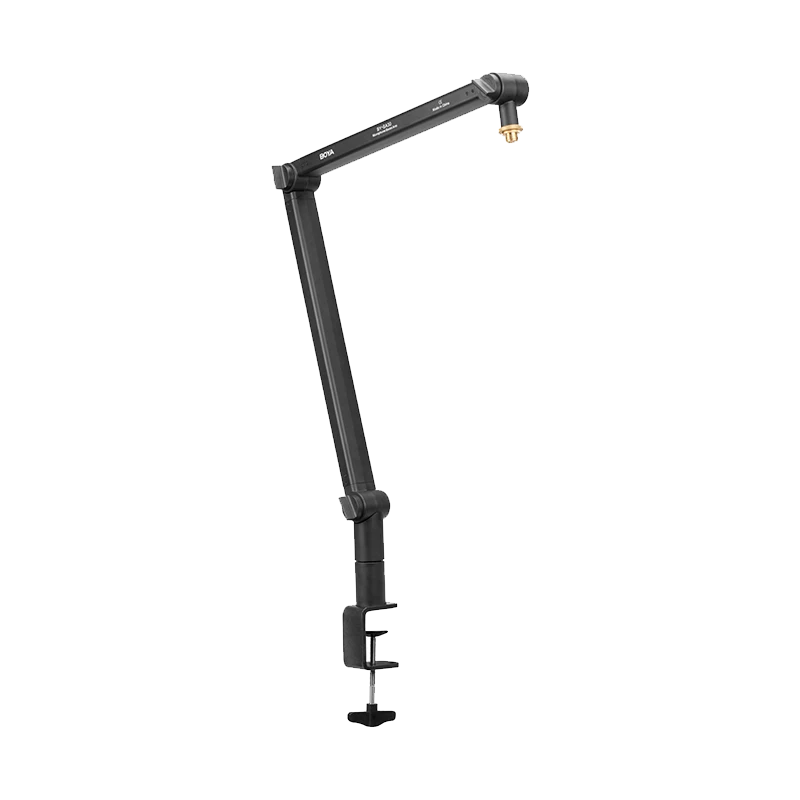
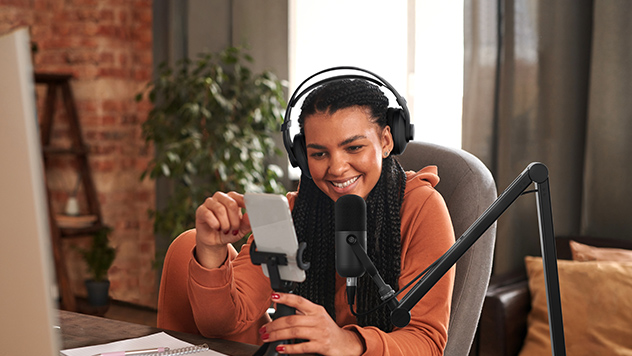
- Desktop for podcasts, voiceovers, or streaming
For example, systems like the BOYA Magic have combined these form factors into a single kit (a 4-in-1 modular approach), while the Saramonic Air SE offers a streamlined hybrid design focused on portability and everyday usability.
The idea isn’t to replace professional tools in every scenario, but to create something more adaptable for everyday use.
Why This Design Makes Sense for Beginners
For someone just getting started, the biggest challenge usually isn’t audio quality—it’s uncertainty. Multi-form systems address that in a few important ways.
1. It Adapts to Different Scenarios
You don’t need to predict exactly how you’ll use your microphone. Whether you’re filming outdoors, recording indoors, or trying something new, the same system can adjust with you. That flexibility removes a lot of friction from the creative process.
2. It Reduces the Need for Multiple Devices
Instead of building a full audio kit right away, you can start with a single system that covers multiple use cases. For beginners, that often means:
- Lower upfront cost
- Less gear to carry
- Fewer decisions to make
It’s a simpler entry point into audio production.
3. It Supports Growth Over Time
Most creators don’t stick to one format forever. You might start with casual vlogging, then experiment with interviews, or eventually move into longer-form content like podcasts or YouTube videos. A single-form microphone can quickly feel limiting as your content evolves.
A multi-form system, on the other hand, grows with you—without forcing you to upgrade immediately.
Is Multi-Form About Innovation — or Just Convenience?
At first glance, multi-form microphones might look like a feature-driven trend. But the shift is less about adding more—and more about removing limitations. This isn’t a breakthrough in raw audio technology. It’s a change in how products are designed around users. Instead of optimizing for one perfect scenario, these systems are built to handle real-world usage, where conditions change constantly and unpredictably.
In that sense, multi-form design is less about innovation in hardware—and more about innovation in thinking.

Where Multi-Form May Not Be the Best Choice
Of course, no solution fits every workflow. Multi-form systems may not be ideal if:
- You work in a controlled, professional studio environment
- You require highly specialized audio performance
- Your setup rarely changes
In those cases, dedicated microphones still offer the highest level of precision. But for everyday creators—especially those still exploring their style—the trade-off often favors flexibility over specialization.
A Subtle Industry Shift Worth Paying Attention To
What’s interesting is that this isn’t just a one-off idea. As more brands experiment with multi-form designs—from fully modular systems to lightweight hybrid setups—it signals a broader shift in the market.
We’re starting to move from:
- Single-purpose tools → All-in-one solutions
- Spec-driven decisions → Experience-driven design
For new creators, that shift matters. It means the industry is beginning to prioritize how people actually create, not just how equipment performs in ideal conditions.
Final Thought: Choosing a Microphone That Fits How You Create
If you’re buying your first wireless microphone, it’s easy to get caught up in comparisons—features, specs, price points. But there’s a simpler way to think about it.
Instead of asking: “Which microphone is the best?”
It might be more useful to ask: “Which microphone can adapt to everything I want to do?”
For many beginners, that’s where multi-form systems start to make sense. Not because they’re perfect in every scenario—but because they make it easier to get started, experiment, and keep creating without constantly second-guessing your gear. And in the early stages, that kind of freedom can matter more than anything else.
To learn more about the latest news from BOYA, join in our official social media accounts: Facebook, Youtube, Instagram.
Frequently Asked Questions
1. What is the best wireless microphone for versatile creators in 2026?
For versatile creators, the best choice is typically a multi-form wireless microphone system that can adapt to different scenarios like vlogging, interviews, and desk recording. Instead of optimizing for one use case, these systems provide flexibility across multiple content formats.
2. Lavalier vs handheld vs desktop microphone — which should beginners choose?
Each type serves a different purpose:
- Lavalier: best for hands-free talking videos
- Handheld: ideal for interviews
- Desktop: great for podcasts or streaming
For beginners who haven’t settled into one format, a multi-form system can combine these options into a single setup, reducing the need to choose upfront.
3. Do I need an all-in-one audio solution for vlogging?
Not necessarily—but it can make the process much easier. An all-in-one (multi-form) system helps eliminate the need for multiple devices, making it easier to switch between recording styles without changing your gear. For beginners, this often leads to a smoother and more enjoyable workflow.
4. Are multi-form wireless microphones suitable for professional use?
They are generally designed for flexibility and convenience, rather than maximum specialization. While they are more than capable for content creation, vlogging, and online production, high-end professional environments may still benefit from dedicated microphones optimized for specific use cases.
5. Is a multi-form microphone worth it as a first purchase?
For many beginners, yes. If you’re still exploring different types of content, a multi-form microphone can help you avoid buying multiple devices early on. It offers a practical balance between performance, flexibility, and ease of use.